

Angela Ritchie
November 10, 2003
Danielle Grenier, Practicum Student
August 5, 2005
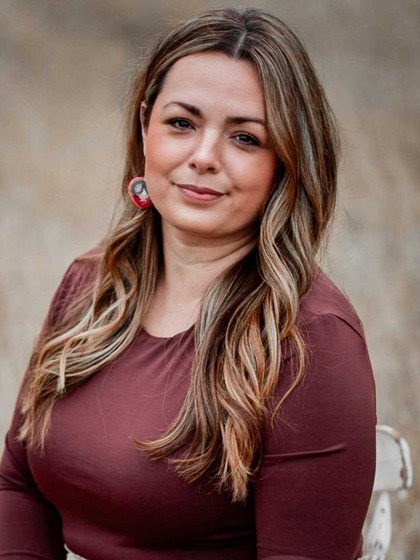
Please Note: Tamara will be completing her placement on April 30th and is currently accepting short-term clients only.
Tamara Rose (she/her) is a social work practicum student with OK Clinical Therapy Group and a proud member of Kettle and Stony Point First Nation. Additionally, she is an RSW candidate, completing her Bachelors of Social Work. Tamara brings meaningful experience supporting children, youth, and families through trauma-informed, strengths-based, and culturally responsive approaches. For example,, this includes her work as an advocate within the Okanagan Public School District.
At the core of her work,, Tamara’s approach focuses on helping clients identify practical tools and strategies they can use . Moreover, she integrates solution-focused practice with strengths-based and family systems perspectives. Tamara draws on both Indigenous and Western frameworks to support healing, insight, and meaningful change. As a result, guided by the Two-Eyed Seeing approach, Tamara values collaboration, balance, and respect for each client’s unique experiences and ways of knowing.
Tamara works with children, youth, families, and individual clients, supporting people to build resilience, navigate life transitions, and strengthen relationships. She welcomes both Indigenous and non-Indigenous clients and has a particular interest in working with children and families, including those navigating separation, anxiety, neurodiversity, and school-related challenges.
During sessions, her sessions are collaborative and goal-oriented, designed to help clients gain insight and leave each session with tools they can put into practice immediately.
At this time, Tamara is practicing as a social work intern under the supervision of Trevor Good (RSW #12430) and Nicole Ripley (RCC #10535).
Outside of her clinical work, Tamara enjoys spending time with her husband and four children, connecting with the land, and creating designs that celebrate identity, resilience, and empowerment.
- Children, youth, and families
- Youth mental health and resilience
- Parenting support, including families of neurodiverse children
- Trauma-informed and strengths-based care
- Identity, belonging, and life transitions
- Solution-focused strategies
- Community outreach and resource navigation
Contact Information:
- Email: [email protected]
- Phone: 250-718-9291
- Have other questions? Contact Us
